
Cooling Water Pumps for Induction Heating Coils and Furnaces
For foundries, forging shops and heat-treatment plants that rely on induction heating. We supply pumps that circulate DM water through coils and power electronics, keeping them within safe temperature.
- DM water compatible
- Stainless steel options
- Steady coil cooling
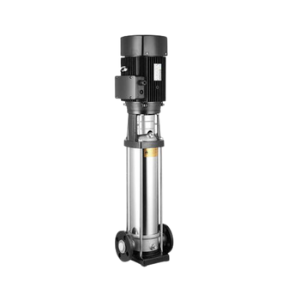
Why coil cooling depends on the pump
Induction heating works by passing alternating current through a copper coil. The changing magnetic field induces currents in the workpiece, which heats up through its own electrical resistance. The coil and the power supply also generate heat, and without constant cooling they would overheat in seconds. That makes the cooling water pump a critical part of every induction installation.
Most induction systems cool the coil with DM (demineralised) water because low conductivity prevents current leakage and scaling inside narrow coil passages. DM water is aggressive towards ordinary cast iron and copper alloys, so wetted parts in stainless steel are strongly preferred. The pump must also deliver enough pressure to push water through small-bore coil tubing at the required flow.
Pumping Solutions supplies vertical multistage, horizontal multistage and horizontal single-stage centrifugal pumps for closed DM water circuits on induction heaters and melting furnaces. We size each pump to the coil maker's specified flow and pressure, and recommend duty and standby arrangements with automatic changeover for furnaces where a cooling failure could damage the coil or create a safety risk.
Key highlights
- Circulates DM water through coils and power supplies
- Stainless steel wetted parts resist aggressive DM water
- Multistage pressure for narrow coil passages
- Vertical, horizontal multistage and single-stage choices
- Suits closed-loop systems with heat exchangers
- Standby pump option protects against coil burnout
Pump features that protect your coils
DM water compatible
Stainless steel hydraulics and suitable seal materials stand up to low-conductivity demineralised water without corrosion or contamination of the circuit.
Pressure for small bores
Multistage pumps provide the pressure needed to drive water through long, narrow copper coil passages and cooling blocks at full flow.
Stable temperatures
Consistent flow keeps coil and inverter temperatures steady, protecting insulation and power semiconductors from thermal stress and early failure.
Duty and standby
Twin-pump arrangements with automatic changeover keep cooling running if one pump trips, avoiding costly coil damage during a melt or heat cycle.
Closed-loop ready
Pumps integrate with plate heat exchangers, cooling towers or chillers in a closed DM loop that isolates the coil from raw water.
Compact layouts
Vertical multistage pumps fit inside cooling skids and water stations where floor space beside the furnace is limited.
Induction cooling applications
Not sure this is the right fit?
Send us your duty point and site conditions. A pump engineer will check the selection and suggest alternatives if needed.
From enquiry to a running pump
A simple, engineer-led process — so you get the right pump the first time.
-
Share your duty
Tell us the liquid, flow, head, temperature and where the pump will run.
-
Get a sized proposal
Our engineers select the pump type, model, material and motor that fit the duty point.
-
Supply & installation
We supply the pump or system and can install, align and commission it on site.
-
Service that continues
Preventive maintenance, spares and repairs keep the system running efficiently.
Induction Heating Pump — FAQs
Straight answers to the questions buyers ask us most. Can't find yours? Ask an engineer directly.
Why is DM water used to cool induction coils?
Demineralised water has very low electrical conductivity, so it does not create leakage paths between live coil sections. It also prevents scale building up inside the narrow coil tubing, which would reduce heat transfer and lead to hot spots. Because DM water tends to attack cast iron and some copper alloys, stainless steel pumps are preferred.
What pump material should I choose for DM water?
Stainless steel wetted parts are the usual choice for demineralised water circuits. They resist the corrosive effect of low-mineral water and avoid releasing iron into the loop, which would raise conductivity. Seal faces and elastomers should also be compatible with the water treatment chemicals used, if any.
How do I size a cooling pump for an induction heater?
Start from the cooling water flow and inlet pressure specified by the induction equipment maker for the coil and power supply. Add losses in the heat exchanger, piping, valves and filters to get total head. Send us these figures along with the water temperature and we will select a pump with a suitable margin.
Should I install a standby cooling pump?
For melting furnaces and production heaters, a standby pump is strongly recommended. Loss of cooling water can damage a coil within a very short time and may create a safety risk with molten metal. An automatic changeover on low flow or pressure switches to the standby pump without stopping the process.
Multistage or single-stage pump for coil cooling?
Coils with long or small-bore passages usually need higher pressure, which multistage pumps deliver efficiently. Larger furnaces with high flow and lower resistance may suit a horizontal single-stage pump. The choice depends on the coil manufacturer's flow and pressure requirements and the layout of the cooling circuit.
How do I keep the cooling circuit healthy?
Monitor water conductivity and top up only with DM water. Keep strainers clean, check the heat exchanger for fouling on the raw-water side, and watch flow and pressure trends. A gradual drop often signals a blocked filter or scaling, while noise may indicate air in the loop or pump wear.
Related industrial applications
Get a cooling pump matched to your induction system
Share the coil cooling flow, pressure and water quality required, and we will suggest a stainless steel pump and standby arrangement.