
Stainless Steel End Suction Pumps for Corrosive and Clean Duty
For process plants, food and pharma units and water treatment operators who need corrosion resistance without complexity. We supply stainless steel end suction pumps selected to keep your liquid clean and your pump running.
- Corrosion resistant
- Cost-effective design
- Easy seal access
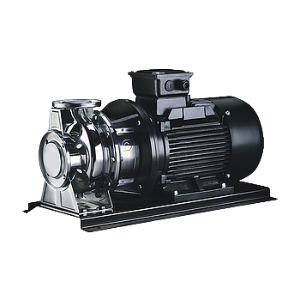
Corrosion resistance in a proven design
End suction pumps are among the most common and cost-effective centrifugal pumps. They are almost always single stage, with one impeller in a volute casing. Liquid enters through a single inlet at the end of the casing and leaves through a discharge on top, which keeps the layout and pipework simple and makes the pump easy to drop into new or existing lines.
Building the pump in stainless steel gives strong resistance to rust, corrosion and chemical attack. The pump can handle aggressive liquids without degrading, and it does not contaminate the product being pumped, which matters in food, beverage and pharmaceutical processes. It also suits seawater, chlorinated water and wastewater, where cast iron would corrode quickly.
We supply stainless steel end suction pumps, including horizontal single stage models, for chemical, food, pharmaceutical, water treatment, HVAC and marine duty. Our team helps you choose the right size, steel grade and mechanical seal for your liquid, temperature and duty point, so the pump delivers reliable, low-maintenance service for years.
Key highlights
- Single stage, end suction design with volute casing
- Stainless steel resists rust, chemicals and saltwater
- Keeps product free from rust contamination
- Simple layout reduces installation and maintenance effort
- Handles clean liquids and those with light suspended solids
Benefits of a stainless steel end suction pump
Corrosion resistance
Stainless steel withstands acids, chlorinated water, saltwater and many process chemicals, extending pump life and keeping performance stable over time.
Product purity
Stainless wetted parts do not rust or shed contaminants, making them suitable for food, beverage and pharmaceutical liquids.
Simple end suction layout
Axial inlet and top discharge make piping straightforward and help the pump fit into new lines or replace an existing unit.
Easy maintenance
Impeller and mechanical seal are accessible without major dismantling, so routine seal changes and inspections take less time.
Energy efficient
A well-matched impeller and smooth stainless surfaces help the pump run efficiently, reducing power cost over its operating life.
Versatile duty
Suitable for water, chemicals and industrial fluids, including both clean and lightly contaminated liquids, across a wide range of process industries.
Industries and applications
Not sure this is the right fit?
Send us your duty point and site conditions. A pump engineer will check the selection and suggest alternatives if needed.
From enquiry to a running pump
A simple, engineer-led process — so you get the right pump the first time.
-
Share your duty
Tell us the liquid, flow, head, temperature and where the pump will run.
-
Get a sized proposal
Our engineers select the pump type, model, material and motor that fit the duty point.
-
Supply & installation
We supply the pump or system and can install, align and commission it on site.
-
Service that continues
Preventive maintenance, spares and repairs keep the system running efficiently.
Stainless Steel End Suction Pump — FAQs
Straight answers to the questions buyers ask us most. Can't find yours? Ask an engineer directly.
Why choose stainless steel over cast iron for an end suction pump?
Stainless steel resists rust and chemical attack, so it is the better choice for corrosive liquids, chlorinated or demineralised water, seawater and hygienic applications. Cast iron is more economical for clean, non-aggressive water. If purity or corrosion is a concern, stainless steel typically gives a longer and more reliable service life.
Which stainless steel grade do I need?
Grade selection depends on the liquid, concentration, temperature and chloride content. Common grades such as SS 304 suit many water and mild duties, while SS 316 offers better resistance to chlorides and many chemicals. Share full liquid details and we will recommend a suitable grade and seal combination.
Can a stainless steel end suction pump handle solids?
These pumps are best for clean or lightly contaminated liquids. Small amounts of fine suspended solids are usually acceptable, but larger or abrasive particles cause wear and may need an open impeller or a different pump type. Tell us the solid size and concentration so we can advise.
What details should I share for a quote?
Send the liquid name and concentration, temperature, required flow in m³/h, total head in metres, suction condition and power supply. For food or pharma use, mention any hygiene requirements. If you are replacing a pump, the nameplate details and flange sizes help us match the new unit.
How is an end suction pump different from an inline pump?
An end suction pump draws liquid in through the end of the casing and discharges at the top, so suction and discharge are at right angles. An inline pump has suction and discharge on the same axis, letting it sit directly in a pipeline. End suction pumps generally offer a wider range of sizes and easier impeller access.
What maintenance does this pump need?
Check the mechanical seal for leaks, monitor noise and vibration and keep the suction strainer clean. Never run the pump dry, as this can damage the seal within minutes. For chemical duties, flush the pump before long shutdowns. Bearings and seals are the main wear parts and are replaced on condition.
Get a stainless steel end suction pump matched to your liquid
Share your liquid, temperature, flow and head and we will recommend a suitable size, steel grade and seal.