
Mould Temperature Control Pumps for Plastic and Rubber Moulding
For moulders and MTC unit builders who need uniform mould temperature and consistent part quality. We supply multistage pumps that circulate hot water or oil through mould channels at steady flow and pressure.
- Uniform mould temperature
- Hot water duty
- Compact multistage pumps
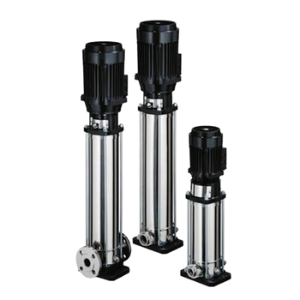
Consistent parts start with consistent mould temperature
In injection moulding, hot melt is injected repeatedly into a cooler mould. Without temperature control, heat from each shot builds up unevenly across the cavity surface. The result is warping, sink marks, poor surface finish, dimensional variation and longer cycle times. In tyre and rubber moulding, uneven temperature also affects curing quality and consistency.
A mould temperature control (MTC) unit circulates water or thermal oil through channels in the mould, adding or removing heat to hold a set temperature. The pump inside the unit must deliver enough pressure to push fluid through narrow, long mould channels while coping with high water temperatures. Multistage centrifugal pumps suit this well.
Pumping Solutions supplies CDL series vertical multistage, CDLK/F series immersion multistage, and CHL, CHLF and CHLF(T) series horizontal multistage pumps for MTC units and mould cooling circuits. These suit new MTC unit builds as well as replacement of worn pumps in existing controllers, and we check temperature and pressure limits for each duty before recommending a model.
Key highlights
- Used in plastic, rubber and tyre moulding
- CDL vertical multistage and CDLK/F immersion series
- CHL, CHLF and CHLF(T) horizontal multistage series
- Pressure for narrow, long mould cooling channels
- Suitable for hot water mould temperature duty
- Compact designs fit inside MTC units
Why multistage pumps suit MTC units
Even cavity temperature
Steady circulation removes heat evenly across the mould surface, reducing warpage, sink marks and rejects caused by hot spots.
High channel pressure
Multistage hydraulics overcome the resistance of narrow, long mould channels and quick couplings while keeping flow turbulent for good heat transfer.
Shorter cycle times
Better heat removal lets parts solidify faster and more predictably, helping moulders reduce cycle time without sacrificing quality.
Several mounting styles
Vertical, immersion and horizontal multistage designs let MTC builders choose what fits their tank, frame and service access.
Hot water durability
Stainless steel hydraulics and suitable seals handle elevated water temperatures and repeated heating and cooling cycles in moulding plants.
OEM and replacement
Pumps suit new MTC unit builds and replacement of worn pumps in existing controllers, helping you restore performance quickly.
Mould temperature control applications
Not sure this is the right fit?
Send us your duty point and site conditions. A pump engineer will check the selection and suggest alternatives if needed.
From enquiry to a running pump
A simple, engineer-led process — so you get the right pump the first time.
-
Share your duty
Tell us the liquid, flow, head, temperature and where the pump will run.
-
Get a sized proposal
Our engineers select the pump type, model, material and motor that fit the duty point.
-
Supply & installation
We supply the pump or system and can install, align and commission it on site.
-
Service that continues
Preventive maintenance, spares and repairs keep the system running efficiently.
Mould Temperature Control Pump — FAQs
Straight answers to the questions buyers ask us most. Can't find yours? Ask an engineer directly.
Why does mould temperature need to be controlled?
Each injection shot brings heat into the mould. Without control, the cavity surface heats unevenly and drifts over the production run. This causes warpage, inconsistent shrinkage, surface defects and variable cycle times. Holding the mould at a set temperature with circulating water or oil keeps part quality consistent shot after shot.
Which pump series suit mould temperature controllers?
CDL series vertical multistage pumps and CDLK/F series immersion multistage pumps are common inside MTC units because they are compact and develop good pressure. CHL, CHLF and CHLF(T) horizontal multistage pumps suit units where a horizontal layout or easier floor-level service is preferred.
How do I choose flow and pressure for an MTC pump?
Flow is based on the heat to be removed and the allowed temperature difference across the mould. Pressure must overcome losses in mould channels, hoses, couplings and the heater or cooler inside the unit. Share mould size, channel details, set temperature and the number of moulds served, and we will calculate the duty.
Can these pumps handle hot water?
Yes, within the temperature limits of the selected pump, seal and elastomers. For hot water above normal levels, suction pressure must be high enough to prevent boiling and cavitation at the pump inlet. Tell us the maximum operating temperature and system pressure so we can confirm suitability.
Water or oil for mould temperature control?
Water transfers heat very well and is preferred for most moulding temperatures. Thermal oil is used for higher mould temperatures where water would need excessive pressure to stay liquid. Pump selection changes with oil because of its viscosity, so specify the medium and its operating temperature.
How can I keep MTC pumps running longer?
Use treated water to prevent scale in pump and mould channels, keep filters clean, and avoid running the pump dry when moulds are disconnected. Check seals for weeping and listen for cavitation noise at high temperatures. Periodic descaling of the circuit maintains both flow and heat transfer.
Related industrial applications
Get the right pump for your mould temperature controller
Share your mould heat load, set temperature and channel details, and we will recommend a CDL, CDLK/F or CHL series pump to suit.